
Blake Schwarz · 23 October 2026
Strategies for Integrating External Data Feeds into Standalone Personal Web Projects
Developers frequently combine external data feeds with standalone personal web projects to pull in live information such as weather reports, financial metrics, or public records without relying on large platforms, and this approach requires careful selection of sources followed by structured code implementation. Research from academic institutions shows that projects using multiple feeds often experience improved data freshness when developers apply consistent caching layers and error handling routines. Those who build these projects typically begin by identifying reliable endpoints that match the site's purpose, then evaluate factors including update frequency, authentication requirements, and format compatibility. Data from government repositories indicates that feeds provided through structured APIs tend to reduce parsing errors compared to unstructured HTML scraping methods, while October 2026 updates from several national open data portals have expanded available datasets in areas like environmental monitoring and transportation statistics.Selecting Suitable Data Sources
People often examine documentation for each potential feed to confirm rate limits and response formats before integration begins, since mismatched data structures can lead to display issues on the final site. According to figures from Canadian open government resources, public datasets covering climate and census information have seen increased usage in personal mapping projects due to their standardized JSON outputs and clear licensing terms.
Observers note that cross-referencing multiple sources helps verify accuracy, especially when one feed supplies supplementary details that another lacks. A single study from an Australian university research group revealed that projects incorporating at least two independent feeds maintained higher uptime during periods when individual providers experienced temporary outages.Implementation Techniques
Integration usually starts with server-side scripts that request data at scheduled intervals, store results locally, and serve cached versions to visitors to minimize external calls. Developers apply languages such as Python or JavaScript with libraries designed for HTTP requests, then format the retrieved content into HTML elements that fit the project's existing layout.
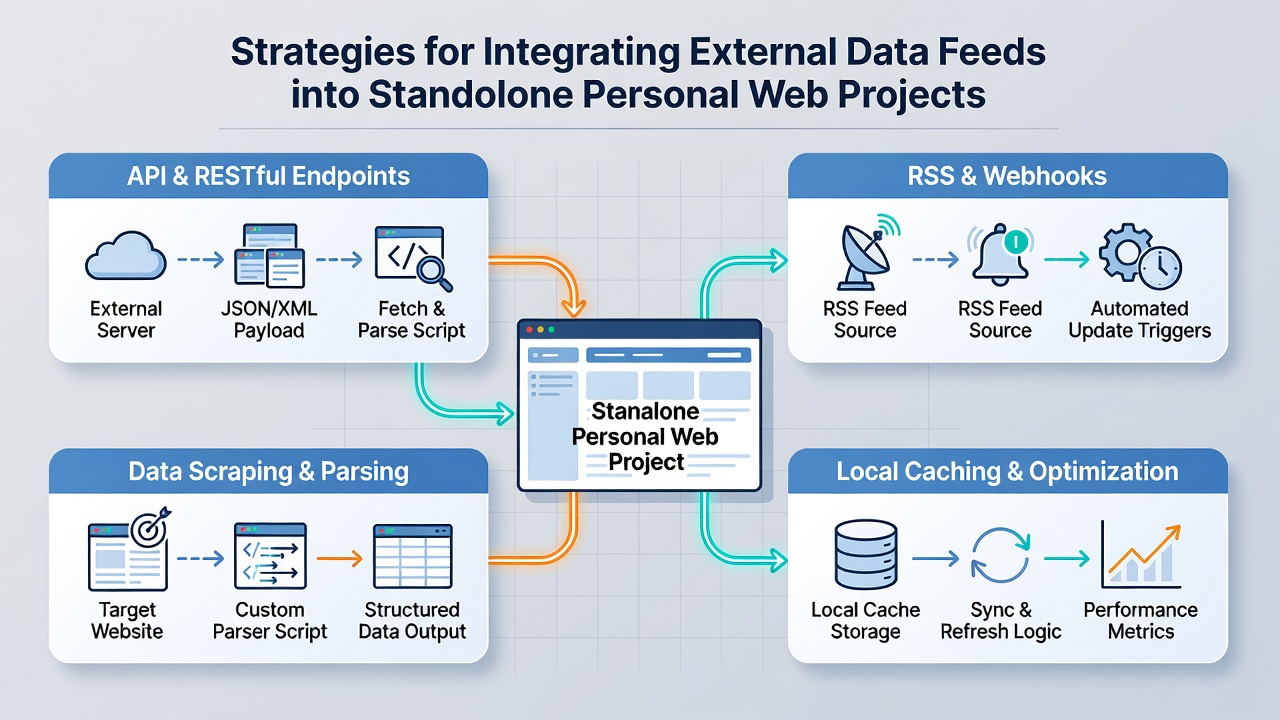 Webhooks provide another pathway when real-time updates matter, allowing the external service to push changes directly rather than requiring constant polling. Those who've studied this method report that webhook setups reduce server load while delivering fresher information, though they demand proper validation of incoming payloads to prevent unauthorized access.
Security and Compliance Considerations
Security practices include storing API keys in environment variables instead of hardcoding them, validating all incoming data against expected schemas, and applying rate limiting on the project side to stay within provider guidelines. Reports from EU data protection authorities emphasize the importance of reviewing terms of service for each feed, particularly when personal projects handle location-based or user-generated information that may trigger additional privacy rules.
Regular audits of connected feeds help identify deprecated endpoints before they cause site errors, and many developers schedule these checks quarterly using automated monitoring tools. Data published by U.S. federal open data programs shows consistent growth in the number of public APIs available for reuse, which expands options but also increases the need for systematic tracking of changes.
Maintenance and Scaling Approaches
Long-term upkeep involves monitoring response times and error rates through logging systems that alert operators when thresholds are exceeded, while modular code structures allow individual feed handlers to be updated without affecting the entire project. Researchers at several technical institutions have documented that separating data retrieval logic from presentation layers simplifies future modifications and testing procedures.
Projects sometimes expand by adding fallback mechanisms that switch to alternative sources when primary feeds become unavailable, ensuring continuous operation. This technique appears in documentation from various industry case studies focused on resilient web architecture.
Conclusion
Effective integration of external data feeds into standalone personal web projects relies on methodical source evaluation, secure implementation patterns, and ongoing maintenance routines that adapt to changes in available datasets. Evidence from multiple regions continues to highlight the value of standardized formats and documented APIs in supporting reliable project outcomes over extended periods.